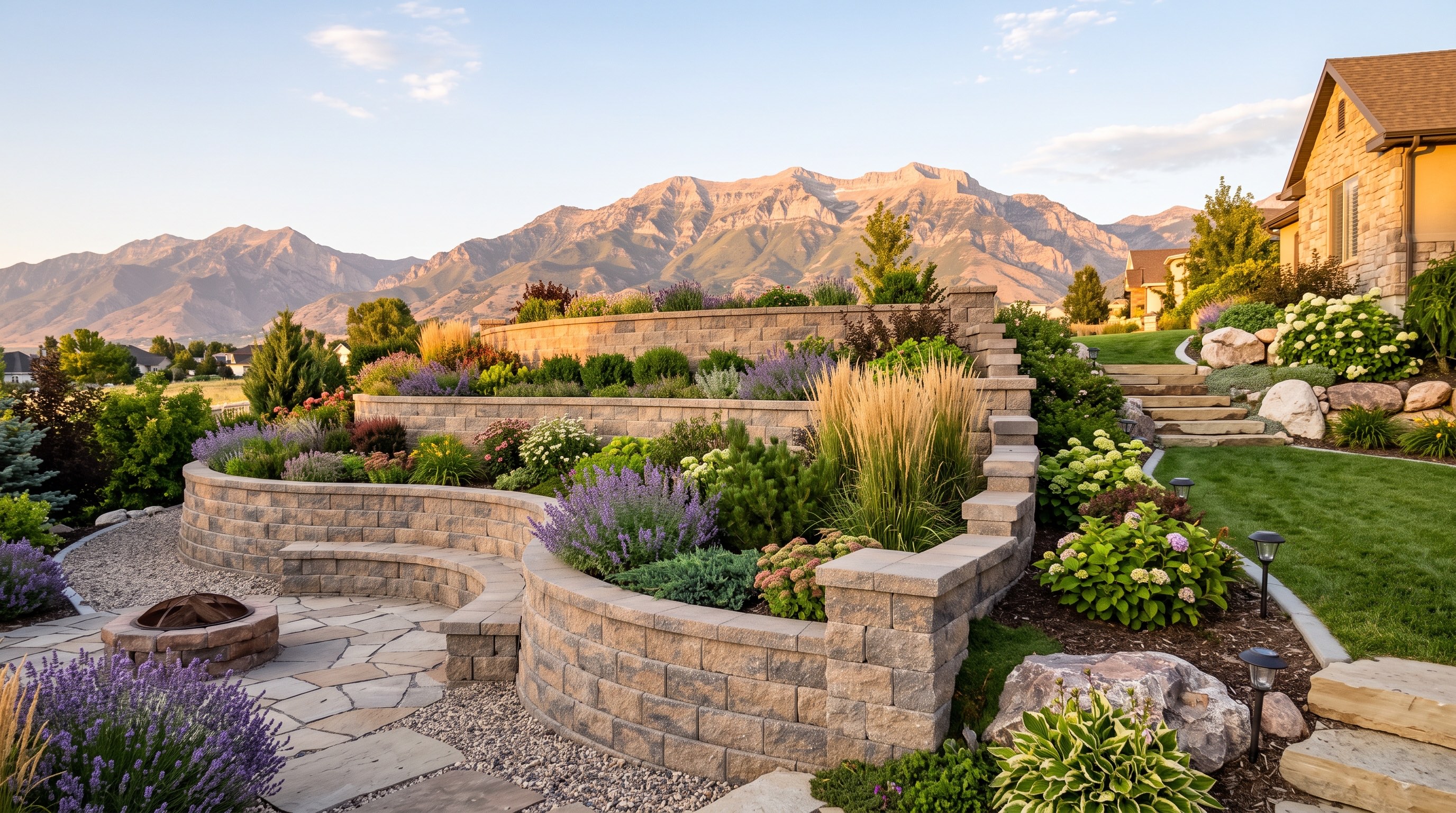
A boulder or rock wall is not automatically suitable, self-draining, stable, or permitted because it appears natural. Before choosing one, document retained-fill and exposed geometry, tiers, slopes, property constraints, loads, utilities, drainage, soils, proposed material and system, construction access, and Lehi's current review path. The call line records retaining-wall interest with the site owner only. No contractor or design professional is attached, and the call does not assess, estimate, or arrange work.
When a boulder wall is the right call
Do not rank boulder and segmental-block systems from appearance, height alone, or a generic material comparison. Ask the responsible professionals to screen:
- Chapter 12-C material provisions. Confirm whether the proposed boulder, rock, organic, or other system is allowed for the known retained-fill height and other conditions; engineering or a permit does not override a prohibition.
- Geometry and loads. Record exposed and retained heights, face area, tiers and spacing, nearby slopes, structures, roadways, fences, and other surcharges.
- Site and system. Document geotechnical and drainage information, foundation or base, batter or geometry, stone specification and placement, reinforcement if any, outlets, testing, inspections, and maintenance.
- Access and property constraints. Identify equipment routes and loads, easements, property lines, utilities, staging, protection, restoration, and neighboring impacts.
Lehi City and the appropriately licensed design professional should determine the available path for the actual facts. This page does not select or approve a wall system.
Boulder walls on Lehi's foothill lots
Boulder walls have distinct geometry, material, access, and load considerations. Ask a provider and design professional you locate independently to assess the site, intended use, drainage, property constraints, and proposed system rather than inferring suitability from appearance or location.
Soil, groundwater, runoff, freezing, slopes, and loads are site-specific. Require the design and written scope to explain the evidence and requirements controlling base preparation, batter, drainage, stone placement, testing, and any reinforcement.
Lehi's current Development Code Chapter 12-C has material-specific provisions and uses retained-fill height, exposed tier height and area, tier spacing, nearby slopes, structures, roadways, and other surcharges in its applicability and possible-exemption screens. Do not decide the path from a single footing-to-top height; verify it with Lehi City before digging.
What a proper boulder wall includes
If Chapter 12-C and the site-specific design allow the proposed system, ask the designer and contractor to put these items in the plans and scope:
- Excavation and foundation or base. Geometry, materials, subgrade acceptance, preparation, compaction, testing, and hidden-condition process.
- Stone system. Source, type, size range, shape and quality criteria, placement geometry, tolerances, rejected material, and substitutions.
- Wall geometry and reinforcement. Batter, embedment, courses, tiers, interfaces, reinforcement if any, and the design calculations or details that control them.
- Drainage. Site-specific surface and subsurface components, discharge authorization, erosion protection, maintenance access, and verification.
- Construction controls. Equipment and lifting plan, exclusion zones, utilities, property protection, backfill, compaction, inspections, as-builts, and restoration.
Do not infer stability or drainage performance from stone size, gaps, weight, or appearance. Require the responsible professionals to document the design basis and completion evidence.
What does a boulder wall cost in Lehi?
First confirm that the proposed material and geometry have an available path under current Chapter 12-C. Do not request pricing for a design that the chapter prohibits, and do not assume engineering or a permit can make a prohibited wall permissible.
| Quote area | What to confirm |
|---|---|
| City and design path | Current material provisions, applicability, submittals, reviews, inspections, and responsible professionals |
| Stone and wall system | Measured geometry, stone specification, foundation or base, placement, reinforcement, and substitutions |
| Site work and drainage | Geotechnical inputs, excavation, backfill, drainage, discharge, access, testing, and restoration |
| Equipment and property controls | Staging, lifting, utilities, easements, protection, traffic, neighboring impacts, and schedule |
A written proposal should separate design, City charges, stone, construction, drainage, equipment, access, testing, taxes, contingencies, exclusions, and schedule. This site publishes no local price range.
The call line records project interest with the site owner only. No retaining-wall contractor is attached, and the call does not provide an estimate, arrange service, or confirm response timing.
How to vet any boulder wall builder
Before engagement, ask who documents the stone system, base, batter, drainage, retained-fill and exposed geometry, tiers, slopes, loads, equipment access, property constraints, site-specific design, Chapter 12-C review, and permit responsibility. Verify licenses, insurance, and the written design and scope directly; confident sales language is not evidence of performance.
Lehi boulder wall questions, answered
Do boulder walls need drainage like block walls?
This page cannot prescribe or compare drainage from the wall label. The responsible designer should address site water, soil, geometry, material, joints or gaps, foundation, backfill, slopes, loads, lawful discharge, erosion, maintenance, and Chapter 12-C requirements in a project-specific plan.
How tall can a boulder wall be?
This site cannot determine an allowable height or system. Chapter 12-C includes material-specific provisions, and the site-specific design, retained fill, exposed geometry, area, tiers, slopes, loads, and property constraints all matter. Verify the proposed design and current City path directly.
Are boulder walls cheaper than block?
No general ranking is reliable. Compare only systems allowed and designed for the same site facts and scope, including design, City review, materials, haul, access, equipment, foundation or base, reinforcement, drainage, backfill, testing, restoration, maintenance, and warranty.
Where do the boulders come from?
Source, geology, size, shape, finish, availability, haul, and suitability vary. Require the designer and contractor to identify the proposed stone and acceptance criteria, and do not approve substitutions from a generic claim that most stone is local or that larger pieces perform better.
Can a boulder wall shift over time?
Movement can occur for multiple reasons, including site, soil, water, geometry, loads, material, design, construction, erosion, impact, and maintenance. No page can guarantee that a wall will not shift. Require inspection and completion records, maintenance terms, and written warranties from the responsible parties.
Can an independent provider serve areas outside Lehi?
No retaining-wall contractor is currently attached to this site. If one is selected later, verify its capabilities, service area, credentials, timing, and price directly before engagement; this call does not arrange service.