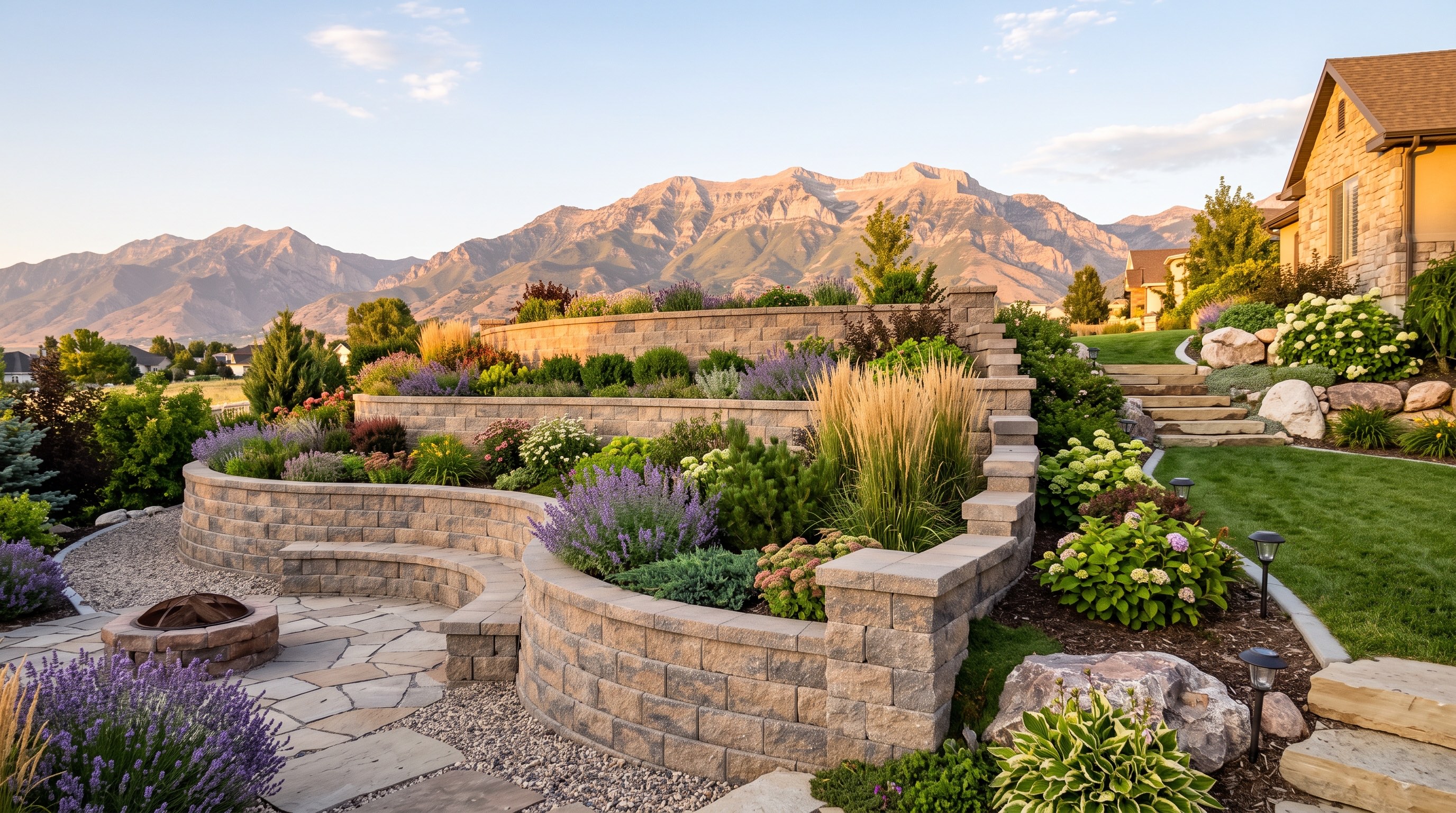
If you're considering a block retaining wall in Lehi, record the site geometry, soils and geotechnical information, water, slopes, loads, nearby features, proposed material, manufacturer documents, and current Chapter 12-C path. Use those inputs to compare written proposals rather than assuming a standard reinforcement or drainage detail applies. The call line records retaining-wall project interest with the site owner only; it does not request a quote or arrange service.
Segmental block, poured, or boulder: what actually matters
Segmental block, poured concrete, boulder, and other systems cannot be ranked categorically by height, drainage, flexibility, structural capacity, or cost. The available choice depends on Chapter 12-C's material provisions, site geometry, soils and geotechnical information, slopes, loads, property constraints, drainage, manufacturer requirements, design, construction access, maintenance, and appearance goals.
For each system that Lehi City and the responsible design professional determine is available, compare the same written inputs:
| Factor | Questions for any proposed system |
|---|---|
| Code path | Is the material and geometry allowed, and what review, design, permit, and inspection path applies? |
| Site and loads | What soils, water, retained and exposed geometry, slopes, tiers, structures, roadways, and surcharges control? |
| System | Which named products, foundation or base, reinforcement, drainage, backfill, testing, and maintenance are specified? |
| Construction | What access, equipment, utilities, property protection, sequencing, restoration, and verification apply? |
| Commercial terms | What design, City charges, materials, labor, contingencies, schedule, exclusions, and warranties are included? |
Manufacturer resources such as Allan Block's documents apply only to their identified systems and conditions. The approved project documents—not a general comparison table—must control.
Why the specific site controls
Do not infer slope, soil, water, loading, or a construction detail from a Lehi address. The responsible professionals should investigate the property and determine what base, drainage, backfill, reinforcement, materials, testing, and monitoring—if any—the proposed system and approved design require.
What a proper block wall includes
The visible block is only one part of the project. Ask each builder to tie excavation, base, embedment, drainage, reinforcement, backfill, testing, caps, and finish grade to the named wall system, site-specific design, manufacturer requirements, and approved plans rather than a generic recipe.
Lehi's current Development Code Chapter 12-C uses retained-fill height, exposed tier height and area, tier spacing, nearby slopes, supported structures, roadways or other surcharges, wall material, and other conditions in its applicability and possible-exemption screens. Do not substitute a single footing-to-top height. Record the facts and verify the current path with Lehi City and the appropriate design professional before digging. See the drainage and permit-planning guide.
What does a block retaining wall cost in Lehi?
Confirm the current Chapter 12-C material and project path before comparing prices. Quote formats vary, and wall-face area alone omits facts such as site investigation, geometry, loads, design, drainage, access, equipment, testing, and restoration.
| Quote section | What to confirm |
|---|---|
| City and professional services | Current review path, design disciplines, submittals, revisions, inspections, testing, and official charges |
| Wall system | Named products, geometry, foundation or base, reinforcement, drainage, backfill, caps, and finish |
| Site construction | Excavation, access, equipment, utilities, staging, protection, haul-off, and restoration |
| Terms | Schedule, taxes, contingencies, allowances, exclusions, change orders, and warranties |
This site publishes no local price range. Compare complete written proposals for the same allowed and designed scope.
The call line records retaining-wall project interest with the site owner only. No contractor is attached, and the call does not provide an estimate, arrange service, or confirm response timing.
How to vet any wall builder
Ask every provider you locate independently to document drainage, reinforcement, base, embedment, backfill, testing, and finish requirements from the proposed system and site-specific design. Also record retained-fill height, exposed tier height and area, tier spacing, slopes, loads, wall material, and who will confirm Chapter 12-C requirements with Lehi City. Verify licenses, insurance, plans, and permit responsibility directly.
Lehi block wall questions, answered
How tall can a segmental block wall go?
This site cannot determine an allowable height. The wall system, site-specific design, soil and geotechnical information, slopes, loads, geometry, tiers, and Chapter 12-C review all matter. Record each input and verify the design and current City path directly.
Do I need geogrid?
It depends on height, soil, slope, loads, and the engineered design. A selected provider should explain whether geogrid is needed and how its length and layers are determined; a site-specific soils review controls.
Is block or poured concrete better?
Neither is better outright. Segmental block, poured concrete, and boulder systems have different space, drainage, reinforcement, appearance, and construction requirements. a provider you locate independently should match the system to your grade, soil, loads, and budget.
Will a block wall crack in Utah winters?
Dry-stacked segmental units and rigid poured walls respond differently to movement, but either system still needs a design for water and soil conditions. Ask a provider you locate independently to explain the base, drainage, and reinforcement for the specific site.
How long does a block wall take to build?
Timing depends on wall size, access, design, materials, weather, inspections, and provider availability. Require an independently located provider's written schedule before work begins.
Can an independent provider serve areas outside Lehi?
No retaining-wall contractor is currently attached to this site. If one is selected later, verify its capabilities, service area, credentials, timing, and price directly before engagement; this call does not arrange service.